Short answer: good training treats are small (bite-sized), soft, so they're chewed and swallowed quickly, and have a strong meaty smell that holds the dog's attention. Portioning matters too – with frequent training sessions, treats quickly add up to a significant share of the daily calorie intake.
Why training treats are different
At home, a treat is simply a reward for being calm. During training, its role is different – it needs to mark the wanted behaviour right away and not interrupt the flow of the exercise. That's why a treat that takes a long time to chew, or has to be broken into pieces, slows the training down and distracts the dog. On top of that, with repetitions treats are given many times in a short space of time, so the size and calorie content of each piece matter far more than with an everyday reward.
This applies just as much to puppies who are still learning basic commands as to adult dogs you're working with on a specific behaviour issue – reacting to other dogs on a walk, for example. The difference is only in how often and how long the sessions are, not in the type of treat.
What to look for
Small size
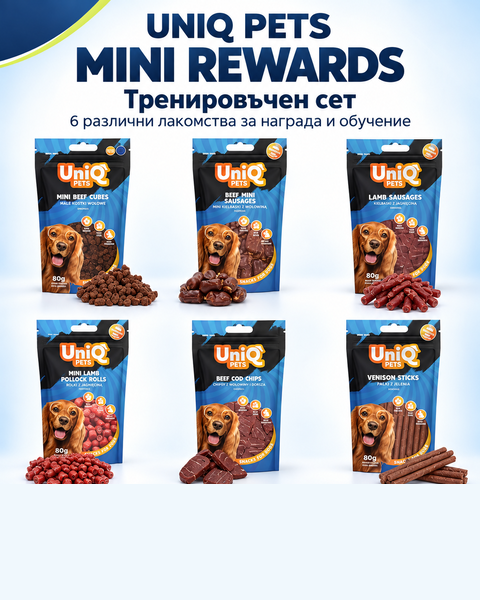
The ideal training treat is small enough to be swallowed in a second or two, without the dog looking away from you. The Uniq Pets Sniffy Mini with lamb and saithe and Uniq Pets Sniffy Mini with rabbit and saithe mini rolls are around 2–3cm and need no breaking up beforehand – it's easy to carry a whole bag on a walk or training session.
Soft texture
Soft treats are chewed quickly and don't distract the dog with a long crunch. Uniq Pets soft chicken "twists" have a high chicken content and a soft texture, suitable for older dogs or ones with sensitive teeth too.
Strong smell and meaty taste
Smell is what keeps a dog motivated, especially in a setting with lots of distractions – a park, another dog, unfamiliar surroundings. Treats high in a single meat, such as Uniq Pets chicken jerky, have a pronounced smell and taste precisely because the meat is the main ingredient, not a filler.
Practical for walks
For longer training sessions outdoors, it helps if the treat is kept in a closed pack that won't get your pocket or bag dirty. Uniq Pets Snack&Sip lamb sausages come in a tub designed exactly for carrying on a walk and quick use between exercises.
How to use them in training
- Give the treat immediately after the wanted behaviour – a delay of even a few seconds makes it harder for the dog to link the reward to the action.
- Cut larger treats into smaller pieces beforehand, so you don't lose time during the exercise.
- Save the most aromatic treats your dog likes best for harder exercises or a more distracting environment.
- Move gradually towards rewarding with words and attention instead of a treat at every repetition, once the behaviour is established.
A hierarchy of rewards
It helps to split treats into "everyday" and "special". For familiar commands at home – "sit" or "lie down", say – a standard, less aromatic treat is enough. For new exercises, working in a park setting, or situations with plenty of distractions – another dog, a cyclist, a stranger – use the most aromatic treat your dog likes best, so you have enough "competing" motivation. That way you keep your strongest card for the moments you really need it.
Portioning and calories
During an active training session, it's easy to hand out dozens of small treats. The general rule is that treats – any treats, not just training ones – should stay to around one-tenth of the dog's daily calorie intake. If you train often, cut back the main food portion for the day accordingly, or choose treats with fewer calories per piece, which is usually the case with small, soft types. For dogs that are overweight or have dietary restrictions, discuss with your vet which treats, and how much of them, are suitable.
For a bigger, "special" reward after a finished training session or lesson, you could offer something like Uniq Pets handcrafted chicken and lamb bagels with white sesame – but precisely because they're bigger, save them for occasional use, not every repetition.
Suitable products
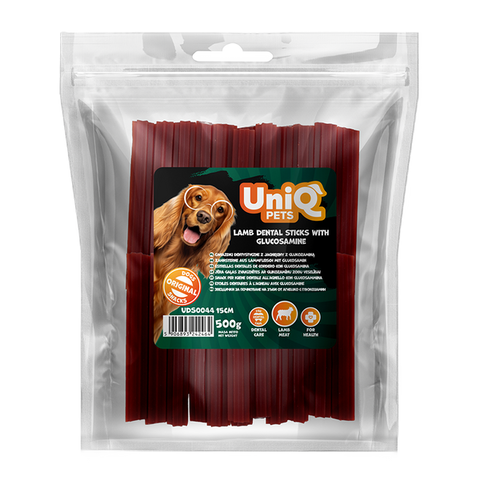
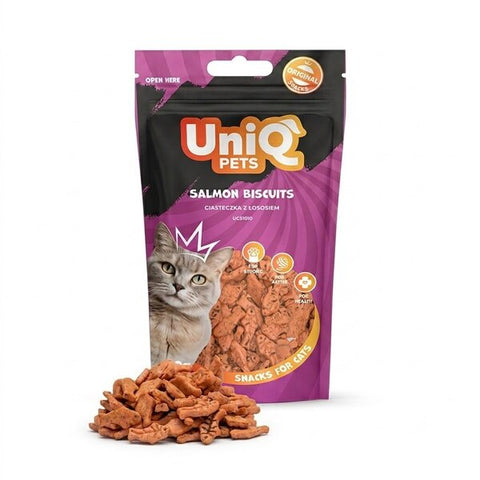
Take a look at the full range of dog treats and the Uniq Pets treats, where you'll find various sizes, proteins and textures, to put together a combination that suits your dog and the type of training.
Read more: how to choose treats for a dog or cat and single-protein meat treats.
Frequently asked questions
How many training treats are too many?
Go by the general rule that treats shouldn't exceed around one-tenth of daily calories. During intensive training, it's better to reduce the day's main food portion than to stop rewarding the dog.
Can I use dry food instead of treats?
Yes, ordinary kibble from the daily ration also works as a reward, especially for dogs that aren't strongly food-motivated. For harder exercises or a distracting setting, though, a more aromatic treat usually gives a better result.
From what age can treats be used in training a dog?
Puppies can have soft treats in small amounts as soon as they're weaned, as long as the treats suit their age and size. Check the product label for a recommended age and take the puppy's overall feeding plan into account.
What should I do if my dog has a sensitive stomach?
Choose a treat with a short, clear ingredients list and introduce a new product gradually, watching for any change in stools or itching. If a food intolerance is confirmed, ask your vet which protein is suitable.