Short answer: a shampoo's ingredients are the INCI list on the label. Ingredients are listed from the largest amount to the smallest, and colourants are recognisable by their CI numbers. Owners most often ask about five groups: sulfate surfactants, parabens, MIT/MCI, formaldehyde-releasing preservatives and synthetic dyes. All five are permitted in EU cosmetics within set limits – some owners simply prefer to avoid them, for example for sensitive skin. Below you will find what each group does and which shampoos list them.
The five groups owners ask about
Sulfate surfactants
Surfactants are the ingredients that clean and make lather. The most common sulfate surfactants are sodium laureth sulfate (SLES), sodium lauryl sulfate (SLS), ammonium laureth sulfate and sodium coco-sulfate. They lift oil and dirt, which is why they are the base of many shampoos – for people and for pets. SLS and SLES are different ingredients, so “SLS-free” does not necessarily mean “sulfate-free”. Sulfate-free shampoos clean with other surfactants, such as sodium C14-16 olefin sulfonate, cocamidopropyl betaine or lauryl glucoside.
Parabens
Parabens (methylparaben, ethylparaben, propylparaben, butylparaben) are preservatives. Almost every shampoo contains water, and a product with water needs a preservative so that it stays usable after the bottle has been opened. Parabens are among the longest-used preservatives in cosmetics; the EU sets maximum concentrations for them.
MIT/MCI
Methylchloroisothiazolinone (MCI) and methylisothiazolinone (MIT) are preservatives from the isothiazolinone group. In shampoos they usually appear together, sometimes MIT on its own. In the EU they are permitted in rinse-off products (such as shampoos) up to a set maximum concentration.
Formaldehyde-releasing preservatives
This group includes DMDM hydantoin, bronopol (listed as 2-bromo-2-nitropropane-1,3-diol), diazolidinyl urea and imidazolidinyl urea. They preserve the product by slowly releasing very small amounts of formaldehyde – hence the name of the group. They, too, are permitted in the EU within set limits.
Synthetic dyes
Dyes give the shampoo itself its colour – usually to match the fragrance or the range. Shampoos for white coats sometimes contain a violet dye that neutralises yellowish tones. In the list, dyes appear with a CI (Colour Index) number, for example CI 19140 or CI 42090, and on American labels as FD&C or D&C followed by the colour name. The dyes permitted in EU cosmetics are listed in a separate annex of the regulation.
How to read an INCI list
The list follows the EU cosmetics rules, which many pet-cosmetics makers also use:
- The order matters. Ingredients are listed by decreasing amount, so in a shampoo water (aqua) usually comes first, followed by the cleansing surfactants. Ingredients below 1 % may be listed in any order after the rest – preservatives and fragrance are often near the end, and their position does not show exactly how much of them there is.
- The names are international. INCI (International Nomenclature of Cosmetic Ingredients) is the same system all over the world: ingredients are in English and plants go by their Latin name, for example Aloe Barbadensis Leaf Juice.
- CI numbers are dyes. Every entry of the form CI 12345 is a colourant. If the list only says “colorant” without a number, the maker has not said which colourant it uses.
- Fragrance is usually one word – “parfum” or “fragrance”.
- Plain-language names are not INCI. Some makers list ingredients with general words such as “cleansing agent” or “preservative”. From such a list you cannot tell which ingredient it actually is.
iGroom and Artero: shampoo by shampoo
The table shows six iGroom shampoos and six Artero shampoos, arranged by purpose. “Yes” means the maker's published ingredient list contains an ingredient from that group; the brackets give its name as written in the list.
| Purpose | Shampoo | Sulfate surfactants | Parabens | MIT/MCI | Formaldehyde-releasing preservative | Synthetic dye |
|---|---|---|---|---|---|---|
| Moisturising | Artero Shampoo Hidratante – also lists an unnamed colourant | no | no | no | no | no |
| Moisturising | iGroom Argan + Vitamin E | no | no | no | no | no |
| Volume | Artero Shampoo Vitalizante | yes (sodium laureth sulfate) | no | yes (methylchloroisothiazolinone, methylisothiazolinone) | no | no |
| Volume | iGroom Vavoom Volumizing | no | no | no | no | no |
| Deep cleansing | Artero Shampoo Detox | yes (sodium laureth sulfate) | yes (ethylparaben, methylparaben) | no | no | no |
| Deep cleansing | iGroom Charcoal + Keratin | no | no | no | no | no |
| Sensitive skin | Artero Shampoo Relax | yes (sodium laureth sulfate) | yes (Methylparaben, ethylparaben) | no | no | no |
| Sensitive skin | iGroom Hypoallergenic | no | no | no | no | no |
| Degreasing | Artero Shampoo Tsunami | yes (sodium laureth sulfate) | yes (ethylparaben, methylparaben) | no | no | no |
| Degreasing | iGroom Squeaky Clean | yes (Sodium Coco-Sulfate) | no | no | no | no |
| White and light coats | Artero Shampoo Blanc – also lists an unnamed colourant | yes (sodium laureth sulfate) | yes (ethylparaben, methylparaben) | no | no | no |
| White and light coats | iGroom True Color Brightening | yes (Sodium Laureth Sulfate) | no | no | no | yes (DC Violet red) |
What the table shows:
- iGroom Argan + Vitamin E, Vavoom Volumizing, Charcoal + Keratin and Hypoallergenic list none of the five groups.
- iGroom Squeaky Clean lists one sulfate surfactant (sodium coco-sulfate) and none of the other four groups.
- iGroom True Color Brightening lists sodium laureth sulfate and the dye DC Violet red.
- Artero Hidratante lists none of the five groups; its list includes a colourant without a name (“cosmetic colorant”).
- Artero Vitalizante lists sodium laureth sulfate and MIT/MCI.
- Artero Detox, Relax, Tsunami and Blanc list sodium laureth sulfate and two parabens – methylparaben and ethylparaben. Blanc's list also includes a colourant without a name (“colorante capilar”).
The table only describes what is written in the ingredient list. It does not compare cleansing, fragrance or the result on the coat.
All brands at a glance
The same check, run on every shampoo with a published full ingredient list from the brands we sell, and from Artero. The numbers show in how many shampoos each group appears.
| Brand | Shampoos with a published list | Sulfate surfactants | Parabens | MIT/MCI | Formaldehyde-releasing preservative | Synthetic dye | None of the five |
|---|---|---|---|---|---|---|---|
| iGroom | 16 | 6 | 0 | 0 | 0 | 1 | 10 |
| Chris Christensen | 27 | 22 | 6 | 15 | 5 | 2 | 4 |
| Groom Professional | 25 | 23 | 3 | 14 | 4 | 11 | 1 |
| Bugalugs | 19 | 18 | 0 | 0 | 0 | 17 | 1 |
| Artero | 8 | 7 | 5 | 1 | 1 | 2 | 1 |
By name – which of our shampoos list one of the five groups:
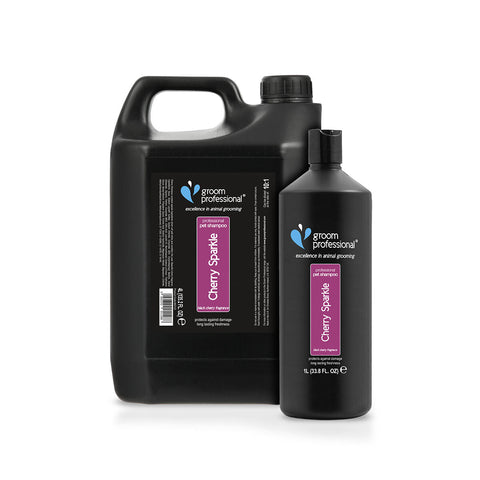
- Groom Professional: the three Exclusive shampoos (Iris & Amber, Mandarin & Rose, Tea & Patchouli) list parabens. The three Exclusive shampoos list bronopol, and Fresh Oatmeal Remedy lists DMDM hydantoin – that is, a formaldehyde-releasing preservative. How many of the brand's shampoos list sulfate surfactants, MIT/MCI and dyes is shown in the table.
- Chris Christensen: the coat-colour shampoos – White on White, Black on Black, Gold on Gold and Red on Red – list parabens (methylparaben and propylparaben) and DMDM hydantoin. Pro-Line Fair Advantage lists methylparaben. Chris Christensen Peace and Kindness shampoo, Happy Eyes and Fresh Faced list none of the five groups.
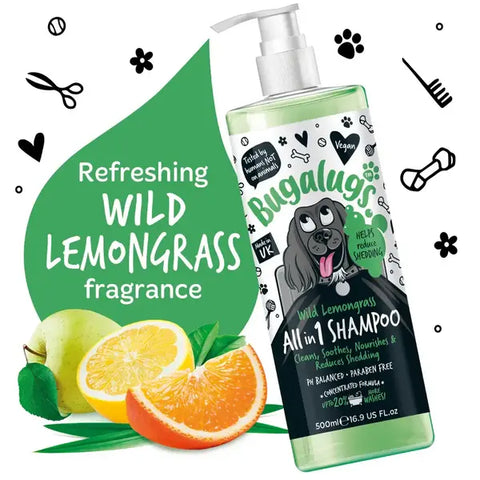
- Bugalugs: no shampoo with a published list includes parabens, MIT/MCI or a formaldehyde-releasing preservative. Most list sodium laureth sulfate and a dye with a CI number. The one with none of the five groups is Bugalugs Wrinkle shampoo for skin folds.
- iGroom: none of the 16 shampoos lists parabens, MIT/MCI or a formaldehyde-releasing preservative. Six list a sulfate surfactant, and only True Color Brightening lists a dye.
Outside the table: Show Tech+ Supreme shampoo lists bronopol and dyes.
How the check was done. Data as of 3 October 2026, from the ingredient lists published by the makers (the iGroom, Chris Christensen, Groom Professional, Bugalugs and artero.com websites). Only shampoos with a published full ingredient list are compared; TropiClean publishes its ingredients with general names (e.g. “preservative”), so it is not included. Eight Artero shampoos are included. Groups were flagged by the written names only: sulfonates (for example sodium C14-16 olefin sulfonate) were not counted as sulfates, and a colourant without a name was not counted as a synthetic dye. Where two sizes of one shampoo are sold as separate products, each was counted separately.
What a bath costs
Ingredients are one criterion, the cost of a bath is another. Groom Professional concentrate shampoos are diluted with water before use, which makes them the economical choice for regular baths at home. To see what one bath with a particular shampoo costs for your dog's size and coat length, use the bath cost calculator.
Suitable products
The iGroom shampoos from the table: iGroom Argan + Vitamin E shampoo for moisture, iGroom Vavoom Volumizing shampoo for volume, iGroom Charcoal + Keratin shampoo for deep cleansing, iGroom Hypoallergenic shampoo for sensitive skin, iGroom Squeaky Clean shampoo for degreasing and iGroom True Color Brightening shampoo for white and light coats. The whole brand is in the iGroom professional cosmetics collection. Browse Chris Christensen products and Groom Professional products as well; which Groom Professional range is for what is explained in the guide Groom Professional: which range for what.
Read more: iGroom: which shampoo and conditioner to choose, Chris Christensen: which line for what and how to choose a dog shampoo by coat type.
Frequently asked questions
Is there a sulfate-free dog shampoo?
Yes. Of the shampoos in the table, iGroom Argan + Vitamin E, Vavoom Volumizing, Charcoal + Keratin and Hypoallergenic list no sulfate surfactants – they clean with other surfactants. Some Chris Christensen shampoos are sulfate-free too, such as Peace and Kindness and Happy Eyes. Check the ingredients of the specific product: “SLS-free” does not necessarily mean “sulfate-free”.
Are parabens dangerous?
The parabens that appear in the tables (methyl-, ethyl- and propylparaben) are permitted in EU cosmetics up to set maximum concentrations. Whether to avoid them is a matter of preference – some owners choose a paraben-free shampoo, for example for sensitive skin. If your dog has a skin problem that does not go away, see a vet.
Why are the ingredients in English or Latin?
Because they use the international INCI names – the same in every country, so that an ingredient can be recognised anywhere. Plant ingredients are written with the plant's Latin name, and water as aqua.
Where can I see a product's ingredients?
On every product page on groom.bg – in the “Ingredients” field. The list is also printed on the label, and many makers publish it on their websites.